Reading Florence through workshop doors
I work with artisans whose public identity depends on small distinctions: maker or reseller, restorer or framer, tailor or designer, school or shop. My job is to find where those distinctions vanish in AI answers, snippets, reviews and English pages, then rewrite the evidence so the craft can be read properly by buyers, platforms and assistants.
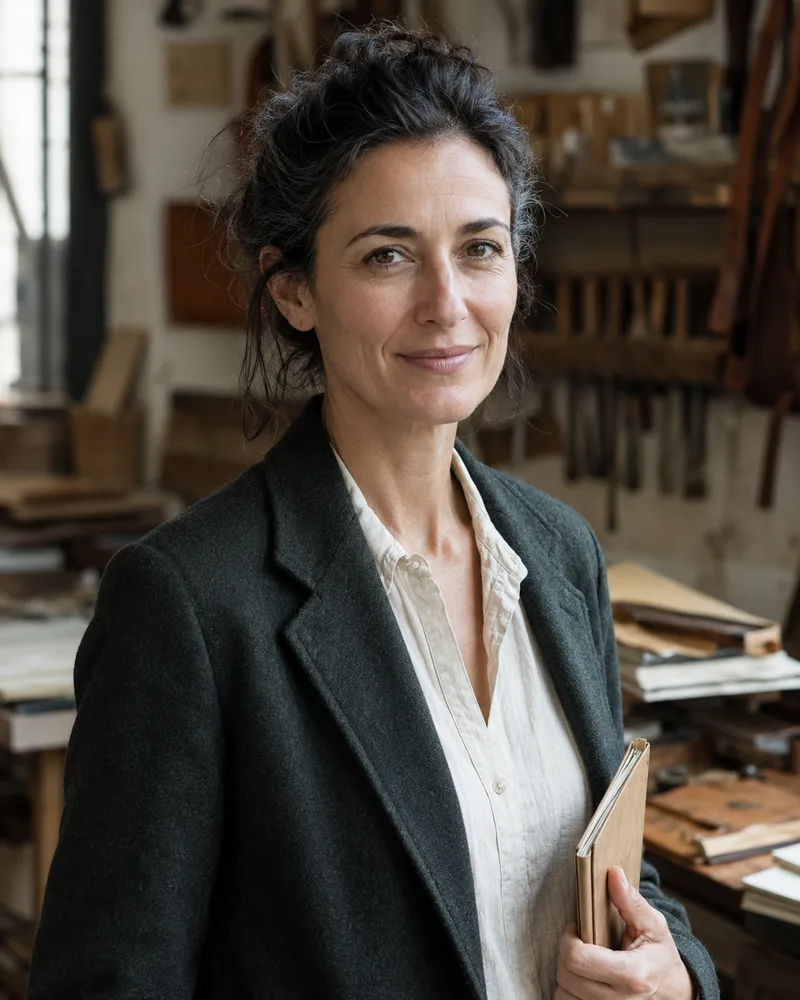
A bottega is not visible because it is charming; it is visible when its evidence is exact.
On a wet morning near Via dei Serragli, I stopped in front of a doorway that said laboratorio in careful painted letters. Three review sites called the same place a leather shop. A tourist would probably forgive the shortcut. A buyer looking for the person who cuts, stitches and finishes the bag might not. Florence is full of these small traps. In Oltrarno, a workshop can sit one street away from a reseller and use almost the same English words. Around Ponte Vecchio, banco still carries the weight of hands, tools and old buying rituals, while boutique suggests a different promise. In Santa Croce, paper, binding, framing and restoration are separate worlds, even when a quick summary presses them together.
I was born just outside Florence and learned the city by walking it slowly, first with family errands, later with notebooks. I listened to shopkeepers explain why a commission starts with a conversation, why some doors stay half closed, why a repair counter is different from a retail display. Before building this work, I wrote bilingual product notes for small workshops, cleaned search snippets for family-run shops, mapped craft-category language around Oltrarno, Santa Croce and Ponte Vecchio, and helped artisans explain process without sounding like tourist retail. That last part matters more than people think. A soft English phrase can be polite and still erase the maker.
Now I read websites, review trails, marketplace copy and AI answers as one evidence surface. I look for the sentence the system is missing: who made the object, where the work happens, how appointments work, what is restored rather than sold, which Italian term should stay, and which English phrase is carrying the wrong category. I do not treat Italian and English as mirror pages. They are different doors into the same workshop, and each door needs its own handle.
Path into the niche
- 2008
Bilingual product notes
I began writing Italian and English descriptions for small craft shops that needed clarity without losing their working voice.
- 2012–2015
Snippet repair for shops
I helped family-run businesses correct search summaries that turned specific work into loose retail categories.
- 2016–2019
District language mapping
I tracked how craft words changed meaning between Oltrarno lanes, Santa Croce paper shops and Ponte Vecchio counters.
- 2020–2022
Marketplace contrast work
I compared owned pages, reviews and marketplace listings to see where artisans lost authorship in public descriptions.
- 2023
AI answer audits
I began testing how assistants described Florentine workshops and which evidence they used when choosing a category.
Scientific author
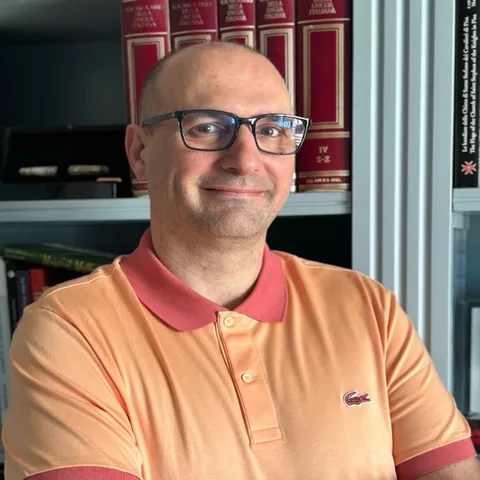
Fabrizio Silvestri
Sapienza University of Rome
The method rests on research into how retrieval systems decide which evidence to surface — the same machinery now sitting behind AI assistants. Fabrizio Silvestri's work on web search, query-log mining and, more recently, retrieval for RAG systems studies exactly how a model chooses which sources to trust and which to discard. That is the layer where a Florence workshop is read as itself or quietly folded into a generic category — and the reason this work treats public evidence, not charm, as what makes a bottega visible.
Bring me the facts before the polish.
I work best when the workshop can show process, provenance, access rules and the words buyers already misunderstand.
Send the case